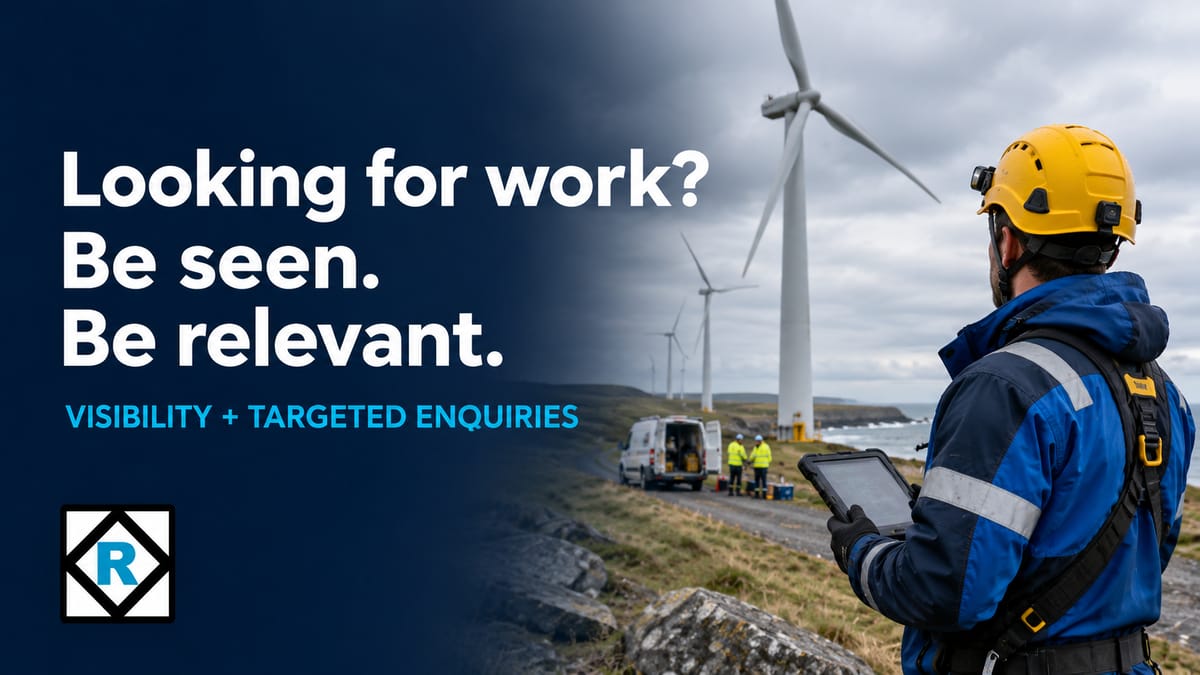
We are seeing more technicians posting on LinkedIn to say they are available for work.
Some have finished a project. Others are approaching the end of a contract or looking to move into a different part of the industry.
Many of these posts attract support. Colleagues share them, former supervisors offer recommendations, and contacts tag people who might help. That willingness to support one another is a real strength of a professional network.
But it raises a useful question:
Alongside making your availability visible, are you approaching the organisations most likely to need your skills?
This is the difference between broadcasting and targeting. Both have a place in a practical job search.
Broadcasting Creates Visibility
An “available for work” post is primarily a broadcasting activity.
You are sharing a message with your network and, through engagement, potentially reaching people beyond it.
That can open doors. A former colleague may be assembling a team. A recruiter may recognise your experience. Someone you worked with years ago may introduce you to a new employer.
LinkedIn is valuable for those connections, as well as professional networking, industry discussion and maintaining relationships between assignments.
However, broadcasting depends on reach, visibility, timing and the right people seeing your message.
A useful contact might miss it. Another might see it just after filling a position. Someone else may remember you when a requirement emerges later.
Posting is worthwhile. It benefits from being supported by a more direct approach.
Targeting Starts with Relevance
Broadcasting asks: “Who might see that I am available?”
Targeting asks: “Which employers have a practical reason to be interested in my experience?”
That means considering:
Whether your skills match the organisation’s work.
How your technical and sector experience fit.
Whether the location and working arrangements are practical.
What specific capability you could bring to its projects.
A handful of relevant approaches can be more useful than a much larger number of general impressions.
Sending the same CV to dozens of unrelated businesses does little to establish that relevance. A focused enquiry explains why you could be a suitable fit.
How Employers Assess Technicians
Availability matters, but employers rarely recruit simply because someone is available.
They are usually trying to meet a particular operational requirement.
In wind energy and industrial services, that may involve a specific combination of certifications, technical competencies, OEM experience, project history and sector knowledge.
Two technicians with the same job title can have very different backgrounds. One may specialise in installation and commissioning; another in servicing, fault-finding or major component exchanges.
Likewise, a rope access qualification tells an employer about access capability. They also need to understand the technical work that person can undertake.
The employer’s questions are practical:
Have they carried out comparable work?
Are their certifications current and appropriate?
Which equipment or turbine platforms do they know?
What supervision or familiarisation might they need?
Can they work in the required location?
“Available immediately” becomes much more useful when those questions are answered.
Visibility Doesn't Always Equal Opportunity
A post may receive hundreds or thousands of views without generating a suitable enquiry.
Those views may come from supportive colleagues or people working in unrelated areas. They may not include a relevant hiring manager.
Even when a hiring manager sees the post, they may not need those skills at that moment. Meanwhile, an organisation with a closer match may never see it.
Skills-based and location-based targeting provides another route: identifying employers with a plausible interest in your background and approaching them directly.
It does not establish that a vacancy exists. It creates a more informed starting point.
Where Rigg Access Fits
Rigg Access can support this approach alongside LinkedIn.
Technicians create detailed profiles covering their skills, certifications, experience and industry background.
The platform can identify organisations that already employ technicians with similar backgrounds, as well as organisations operating within practical travelling distance.
This helps technicians make focused speculative enquiries, including to businesses outside their existing network.
A complete profile matters. Specific details about your experience give an employer more to assess than a broad job title.
There may be no immediate requirement, but a relevant enquiry can begin a conversation or introduce you for future consideration.
Why the Match Matters
Consider a blade technician with GWO training, IRATA certification and offshore repair experience.
A LinkedIn post may generate introductions through former colleagues. Alongside that, approaching organisations employing technicians with similar blade repair experience gives the enquiry a clear technical connection.
Details of repair work, offshore projects and current certifications help the employer assess suitability.
Now consider a wind turbine technician with service and fault-finding experience on specific OEM platforms.
An organisation maintaining those platforms may have a stronger reason to engage than one concentrating on different equipment or construction work.
Identifying those employers, including businesses within a workable travelling distance, makes the approach more purposeful.
In both cases, a relevant enquiry helps the employer understand where that technician could fit.
Use Both Approaches Together
Keep using LinkedIn to build relationships, contribute to discussions and make your availability known.
Alongside that, identify relevant employers through Rigg Access and send considered enquiries explaining your experience, availability and practical working area.
Neither approach guarantees work. Together, they combine the opportunities created by a professional network with a more deliberate search for suitable employers.
LinkedIn helps people know you're available. Rigg Access helps identify who is most likely to need someone with your skills.
Already registered with Rigg Access? Explore relevant organisations and make a speculative enquiry. Sign-in required.